




Whether you’re taking a jog through Lumphini park or lounging by the river, you are soon
enough undoubtedly going to come across one of Thailand’s most controversial figures – the
monitor lizard. Here is everything you need to know before your next nature stroll.
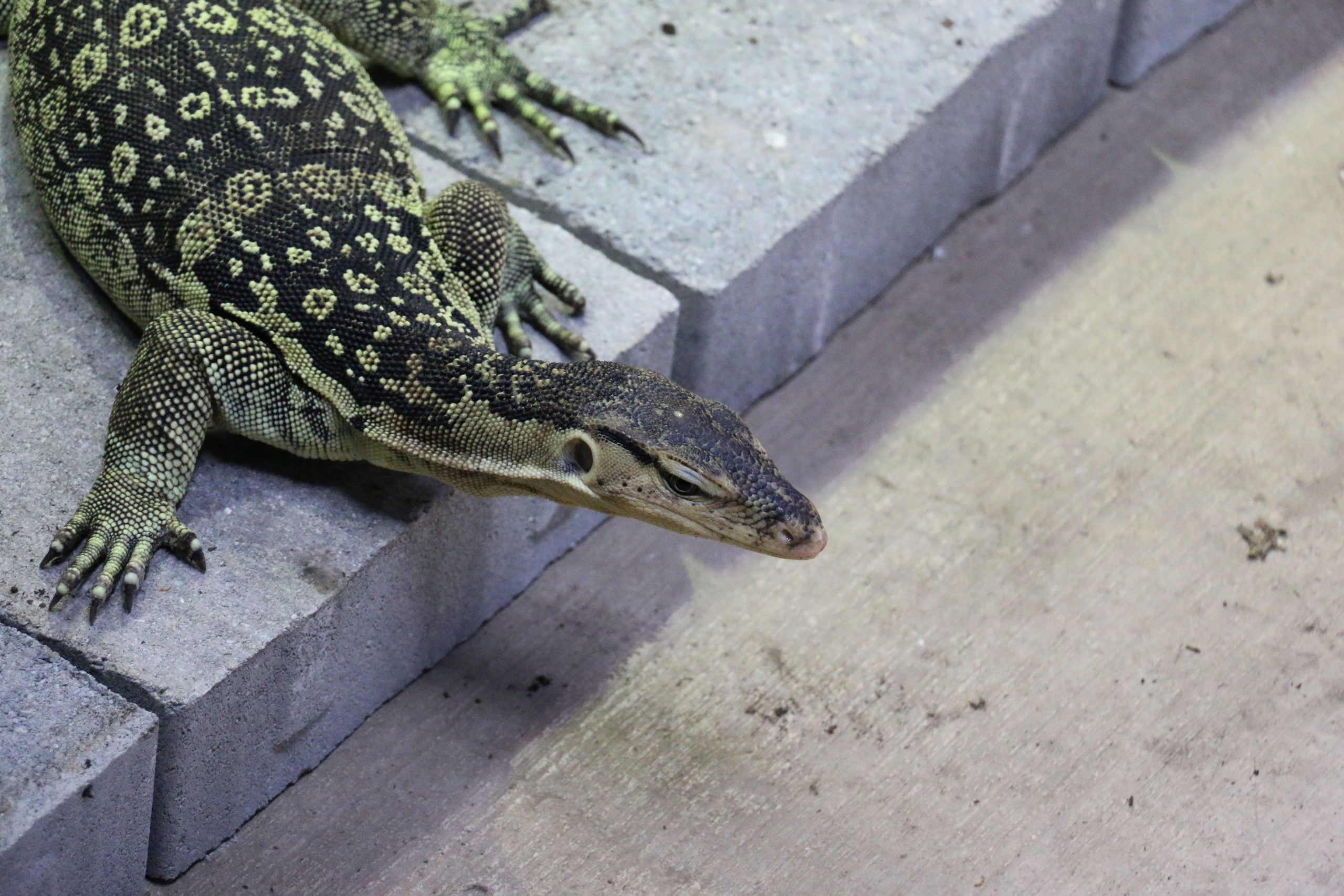
Origins and Biology
The monitor lizard is a cold blooded reptile found across Asia, Africa, Oceania and some
parts of North America. It is in the Varanidae family, genus in Varanus, and includes over 90
different species, one of which lounges right on Thai land. The Veranus salvator (more
specifically the Varanus salvator macromaculatus, but that’s more of a mouthful) is one of the
largest lizards in the world. They have been recorded to reach lengths of over 300 cm, with
the majority getting to about 230 and under. This makes it second to only the Komodo
dragon, its close cousin in the Varanus genus.
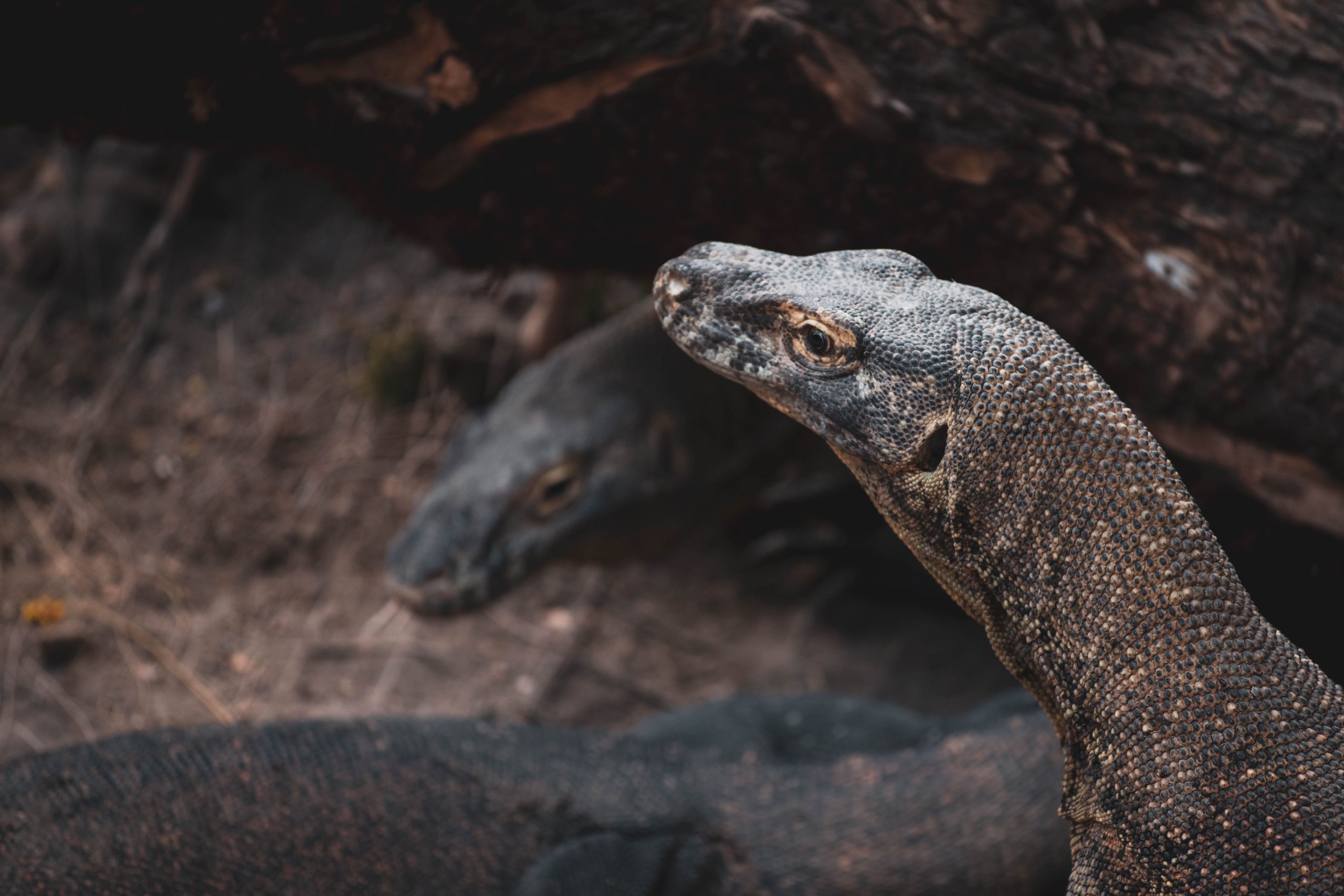
Their bodies are typically a dark brown colour dotted with irregular and rowed yellow spots,
although some have been found to be fully black. These used to be regarded as a subspecies,
but are now considered to just be a differently decorated V. s. macromaculatus . Despite their
scary appearance, they are not dangerous to humans unless they feel threatened, and are able
to coexist peacefully as long as no one gets too close. In the event of an all-too-comfortable
tourist, however, they may defend themselves using their tail, teeth, or claws.
Being carnivorous creatures, their main source of food is fish. Research conducted into their
daily activity shows their main times for hunting is between 06:00 a.m and 08:00 a.m. For the
rest of the morning, they are found lounging in the sun and swimming peacefully until the
late evening, where they switch to scavenging for leftover fish or food left behind by humans.
Lumphini Park
If you ever want to see these reptiles in their own habitat, look no further than Bangkok’s
Lumphini Park. It is conveniently located to the city’s public transport system, with a
leisurely six minute walk from the MRT’s Si Lom station. Be mindful of getting off at Si
Lom and not Lumphini station – understandable mistake to make – if you want to save
yourself an extra two minutes.
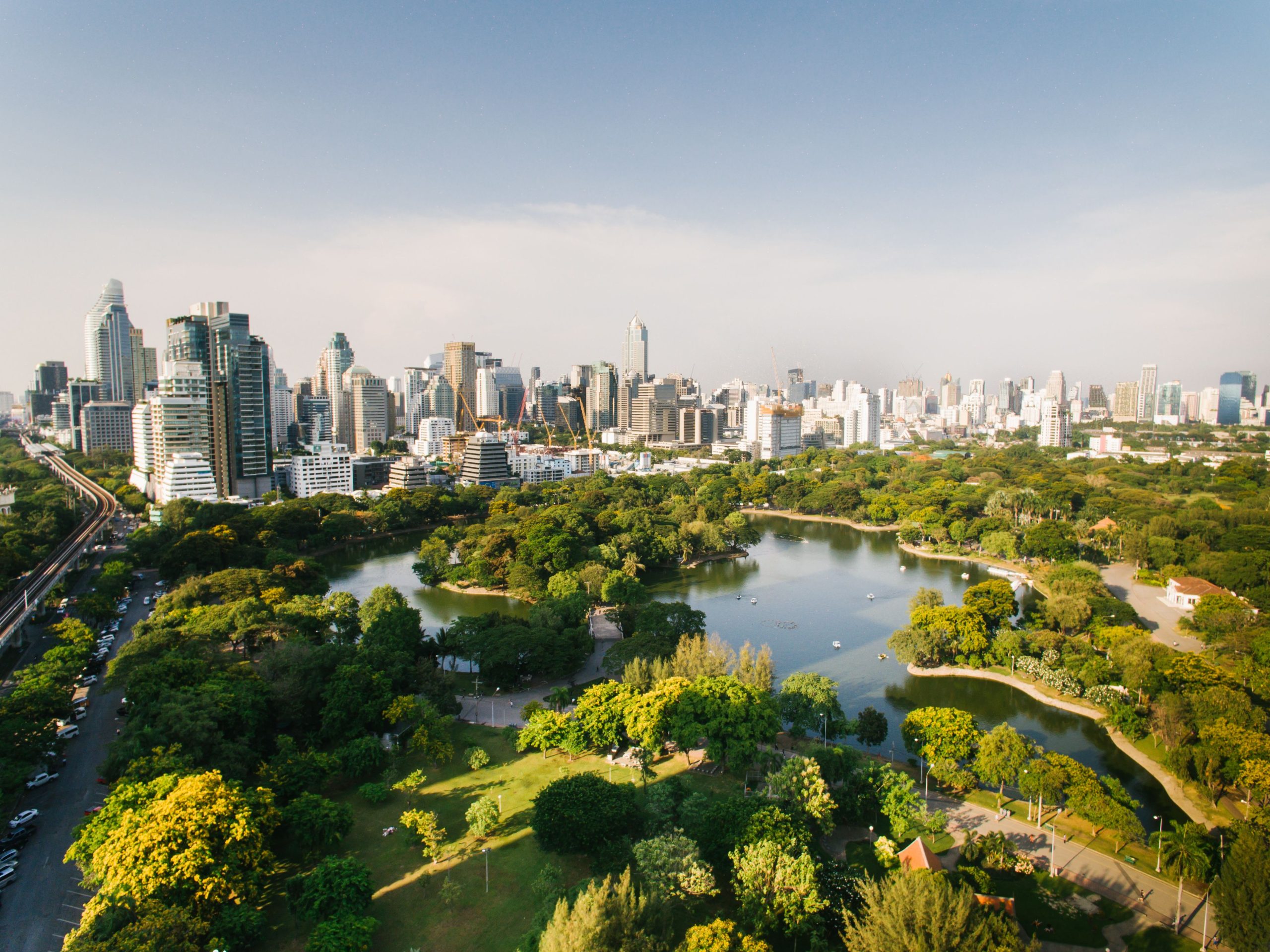
Lumphini Park was Bangkok’s first public park. It is filled with greenery, life, and
community: from its fish-filled lakes to its workout classes. The park was originally called
the Sala Daeng field before Rama VI donated it, reforming it from a private garden to a
blooming green space for the public to enjoy. Its new name comes as a reference to Buddha’s
birthplace, Lumbini, in Nepal. It was opened in 1925, and a statue for King Rama was built in
1942, where it remains to this day.
Today, it is home to playgrounds, libraries, the Bangkok Elder Citizen Club, and over a
hundred of Thailand’s monitor lizards.
What’s in a name?
If we’re talking etymology, the monitor lizard’s place in Thailand is quite interesting. The
original name for it is ‘hia’. This is a word that Thai people would prefer not to use, as it is an
insulting and vulgar word. This bad association can be traced back to rural Thailand, where
water monitors would sneak into people’s homes to eat their livestock and domestic animals –
another less popular name for them being “chicken eater”. The term has also been used to
describe humans if you wish to really insult somebody – however this is not recommended
and significantly frowned upon.
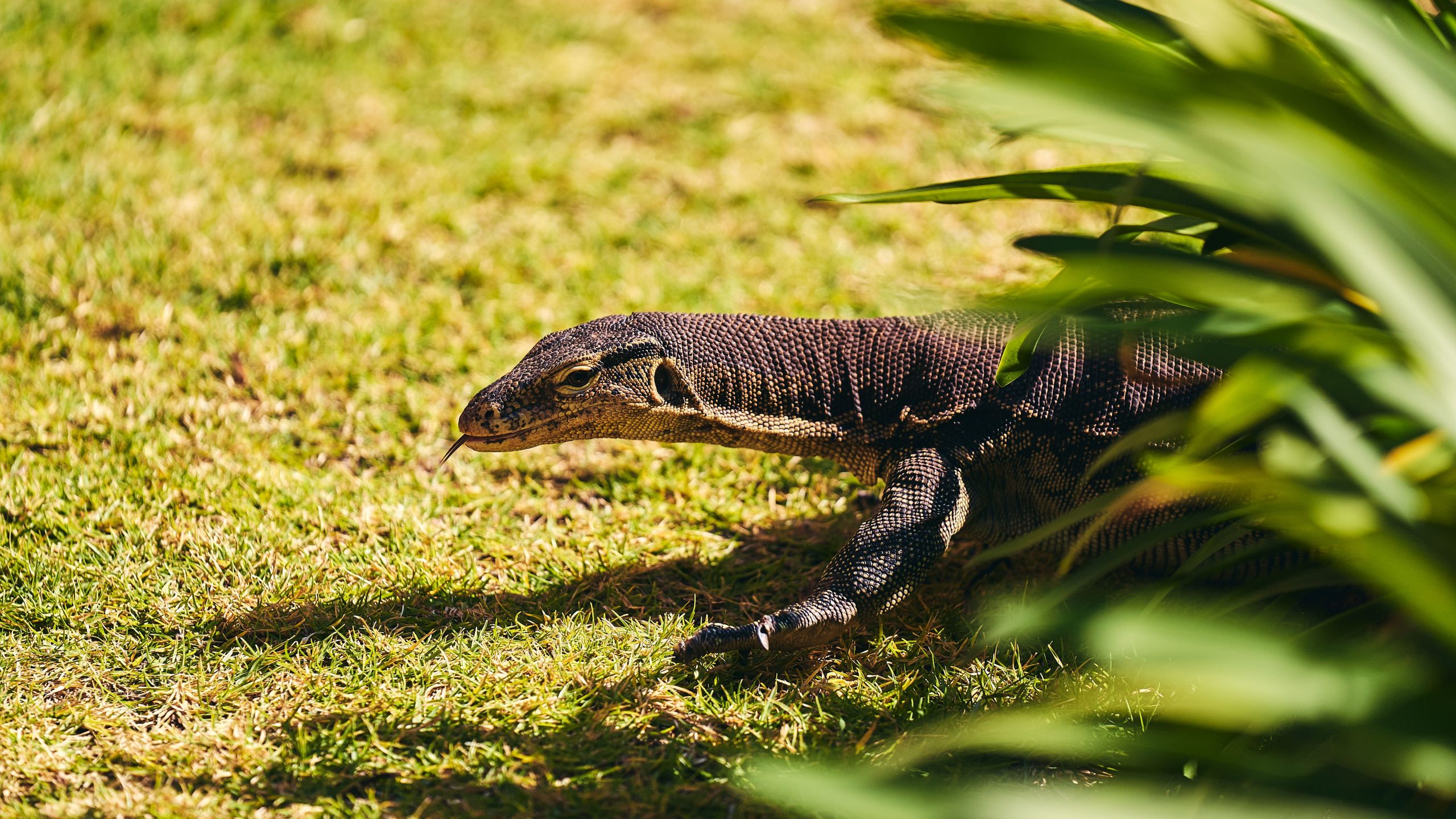
Because of the negative associations to ‘hia’, the word is thought to bring bad luck and
negativity. Therefore, a new term emerged for monitor lizards: tua ngoen tua thong. This
name refers to its ‘silver and gold’ colour, and is a much politer euphemism to use in
conversation.
Taking a Walk
To see these creatures with my own eyes, I decided to take a brisk morning walk through
Lumphini park, and see just how easy it is to spot them. I had no trouble – the first one
greeted me just as I walked into the park. While it was fascinating to spot these large lizards
completely free and relaxed in the wild, an entirely different experience to watching them
through the bars of a cage, a different aspect quickly caught my attention. The differences
between tourists and locals in response to the water monitors were astounding. Tourists
would carefully move around the lizards, eyes transfixed, cameras out. One particular tourist
I spoke to voiced a slight fear at their size and alligator-like appearance, yet showed clear
excitement whenever a new or bigger one would appear in the river before us.
Locals had a very different approach. They would watch the tourists with amused and kind
smiles, never even sparing a second glance to the lizards in front of them. “They eat
everything”, one told me, a clear sense of annoyance and exasperation in his voice as a
particularly large lizard cut right in front of us to reach the river.
While the water monitor may be a bit of a pain in the neck for locals, they are also highly
valuable for the city’s pest control, and a clear sign of Bangkok’s glorious variety. So, next
time you’re taking an evening stroll through Lumphini park, make sure to keep an eye out for
long tails and pointy tongues.